


Bab el-Mandeb: Yemen’s Crisis and the Security of Energy Routes
Time to read 3 minutes
The war involving Iran, the United States and Israel has placed the Strait of Hormuz at the centre of geopolitical attention. In recent weeks, the Bab el-Mandeb Strait has also returned to the forefront, in a region already affected by Houthi attacks on commercial shipping since 2023.
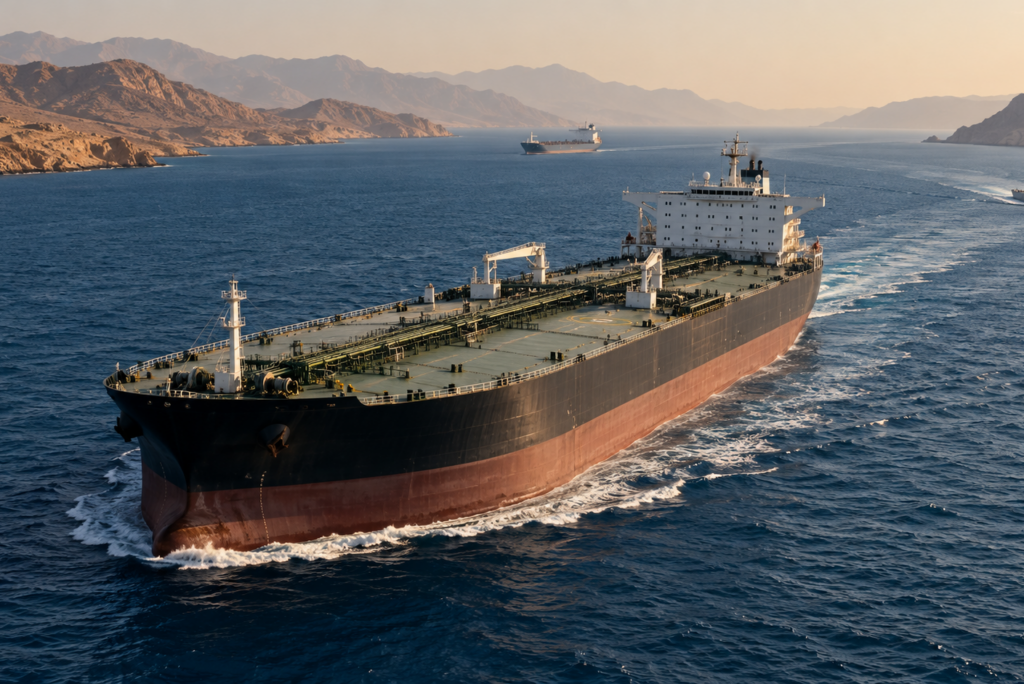
The Bab el-Mandeb Strait is a chokepoint linking the Gulf of Aden and the Red Sea. It is an essential passage for merchant vessels and oil tankers sailing from the Indian Ocean to the Suez Canal through the Red Sea.
The Houthis, the Iranian-backed Shia militia active in Yemen and opposed by government forces and Saudi Arabia, captured the city of Mocha during their September offensive, extending their presence towards the Strait and threatening the security of navigation. On 5 October, however, government forces, supported by Saudi air strikes, announced a coastal counteroffensive and the recapture of Mocha, although the city’s status remains unclear. Meanwhile, the Houthis are advancing inland, where government forces are struggling to contain their momentum.
The Houthis’ capabilities are well established: for years, the militia has posed a serious threat to commercial shipping in the Red Sea and the Gulf of Aden, demonstrating significant missile and operational capabilities, including the launch of ballistic missiles towards Israeli territory.
The vulnerability of alternative routes to Hormuz was also highlighted by September’s drone attacks on the East-West pipeline, which Saudi authorities attributed to Iraqi militias. The pipeline allows crude oil to bypass the Strait of Hormuz by transporting it to Yanbu, on the Red Sea. From this port, located north of Bab el-Mandeb, tankers bound for Suez and the Mediterranean do not need to cross the Strait, which remains an essential passage for those heading towards the Indian Ocean.
Initial estimates suggested a disruption lasting several weeks, but Saudi Arabia quickly restored the pipeline’s operations. The recovery in regional exports, alongside other factors, including the anticipated release of G7 oil reserves, helped ease pressure on oil prices.
The increasingly complex situation in Yemen nevertheless keeps the region on high alert. Italian Defence Minister Guido Crosetto has raised the prospect of independent Italian naval initiatives to protect merchant shipping. Rome has also called for the EU’s Operation Aspides to be strengthened.
For now, the situation remains highly fluid: the government’s coastal counteroffensive is unfolding alongside Houthi pressure in the Taiz hinterland. The Houthi capture of Perim Island, also known as Mayun, is a key development, and it remains unclear whether the militia still controls it. More broadly, control of coastal and island positions, as well as the high ground overlooking them, can enhance the militias’ ability to threaten and disrupt maritime traffic at an already critical moment for crude oil flows. It remains to be seen whether government forces, supported by Saudi Arabia, will manage to stabilise the situation and regain ground in the coming weeks.
