


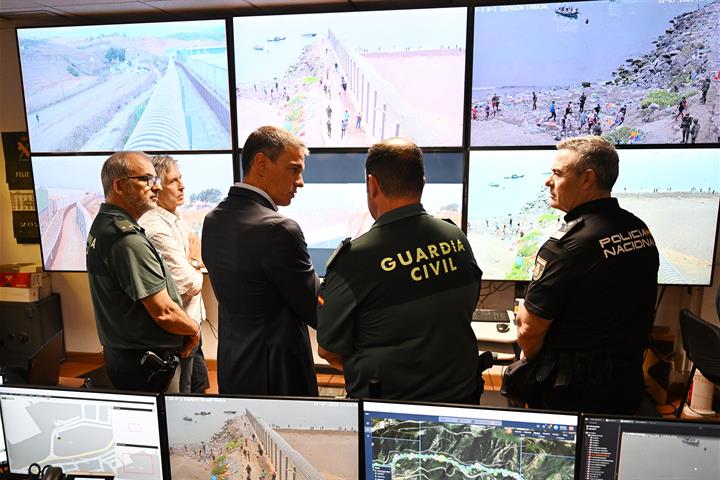
The arrival of more than 73,000 irregular migrants in Ceuta has represented a socio-political event of major significance. It was partly caused by a presumed legal loophole resulting from a misinterpretation of a Spanish Supreme Court ruling, which allegedly allowed for easier entry by sea, combined with the perception of a more lenient policy of reception and regularisation under Sánchez, Morocco’s economic difficulties, and the activities of criminal networks. The media buzz, particularly on TikTok, also helped create the hype. Migration is certainly a spontaneous and multifaceted phenomenon, but in this case, with more than 73,000 people moving simultaneously, doubts about the spontaneity of the phenomenon quite legitimately arose.
The strong presence of sub-Saharan migrants, in particular, raised suspicions that Morocco may have turned a blind eye to the situation, even if it was not directly complicit. This came against the backdrop of Moroccan territorial claims over the enclaves of Ceuta and Melilla, the last remnants of Spain’s colonial past in North Africa, as well as other tensions with Madrid. Spanish intelligence services even raised the possibility that further mass arrivals on the coast of Ceuta were being planned for 15 August, lending credibility to an appeal that had appeared on social media. The event, however, did not take place, partly thanks to the intervention of Moroccan authorities, who stopped around one hundred migrants, most of them sub-Saharan, approximately 3 km from the border. The geopolitical and organised-migration hypothesis has certainly dominated public debate in European countries.
The political reaction in Europe was immediate, with Italy suspending the Schengen regime for 60 days and introducing checks on non-EU nationals arriving from Spain. The EU Presidency, however, was quick to respond, stressing that there was, at that time, no risk of mass movements from Spain to other EU countries, nor were there any security alerts. Nevertheless, two irregular migrants linked to ISIS were arrested, raising the reasonable concern that sporadic terrorists affiliated with the Islamic State or other jihadist groups might be present among the migrants. This possibility understandably heightened concerns among other European states, including Italy.
In response to the Italian decision, Spain reintroduced border controls with Italy. Given the inability to bring the situation in Ceuta back under control quickly, however, Spain was forced to declare a state of emergency in the enclave, thereby indirectly confirming the concerns raised by Italy. Has the spectre of uncontrolled illegal immigration returned to Europe? Certainly, such a massive influx over such a short period shocked European public opinion, and it was made possible in large part by Ceuta’s territorial contiguity with Morocco. The consequences for security and public order are certainly not comparable to Italy’s experience of 600,000 arrivals in a single year, which were more spread out over time, although concentrated in a limited number of hotspots.
In Ceuta, meanwhile, there is a health emergency, with suspected cases of tuberculosis, although the Spanish Health Minister, García, has ruled out any pressure on hospitals. There are also still camps both on the outskirts of the city, particularly hard hit by the situation, and on the beaches, while businesses have been forced to close because of security concerns. Several sexual assaults have also been reported, primarily involving migrants, further exacerbating tensions among the local population and fuelling heated debates in Spain and Europe more broadly.
The mass influx of irregular migrants obviously creates problems at points of arrival, but also in transit hubs such as bus and railway stations in large and medium-sized cities, with an increase in crimes such as harassment and theft in the immediate vicinity of major transport hubs experiencing high flows of irregular migrants. With the arrival of autumn, migration routes will certainly slow down, but the structural problem remains, and no easy solutions appear to be on the horizon.
Cover photo: Ministry of the Presidency. Government of Spain
